Unveiling Leonardo's Masterpiece: The Enduring Legacy of the Lady with an Ermine
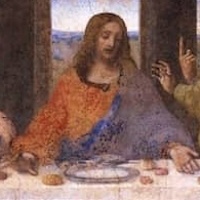
Leonardo da Vinci, a name synonymous with unparalleled genius, left an indelible mark on the world with his profound contributions to art, science, and invention. While iconic frescoes like *The Last Supper* capture the grandeur of spiritual narratives, his individual portraits offer an equally captivating window into the human soul and the innovative spirit of the Renaissance. Among these, *The Lady with an Ermine* stands as a testament to Da Vinci’s extraordinary skill, a vibrant oil painting on walnut wood that continues to intrigue art enthusiasts and historians alike. This masterpiece, featuring the captivating Cecilia Gallerani, reveals not just a stunning likeness but a complex tapestry of symbolism, artistic innovation, and a fascinating history of alteration and preservation. Delving into the layers of this painting allows us to appreciate the multifaceted brilliance that characterized the artist who also gave us *The Last Supper*, exploring how he masterfully intertwined personal narrative with universal artistic principles.
Cecilia Gallerani: A Portrait of Persona and Power in Renaissance Milan
The vibrant canvas of *The Lady with an Ermine* brings to life Cecilia Gallerani, a young woman who played a significant role in the courtly life of late 15th-century Milan. Born into a prominent family, Cecilia's beauty, intelligence, and cultured demeanor caught the eye of Ludovico Sforza, known as "Il Moro," the Duke of Milan. From 1489, she became his mistress, an arrangement that was not uncommon among the aristocracy of the time, and quickly established herself as a leading figure in the Duke's sophisticated intellectual circle. It was during this period, likely between 1489 and 1491, that Leonardo da Vinci, then in the Duke's service, was commissioned to paint her portrait.
Leonardo's presence in Milan under Ludovico Sforza's patronage was a fertile ground for artistic and scientific exploration. The Duke was a fervent patron of the arts, assembling a court that rivaled any in Italy for its splendor and intellectual vibrancy. For Da Vinci, painting Cecilia was more than a mere commission; it was an opportunity to capture the essence of a remarkable young woman whose intellect and charm were as renowned as her beauty. Unlike many stiff, formal portraits of the era, Da Vinci sought to imbue his subjects with life and psychological depth, making *The Lady with an Ermine* a groundbreaking work that transcends simple representation to explore the sitter's very soul.
The Enigmatic Ermine: Decoding Da Vinci's Layered Symbolism
At the heart of *The Lady with an Ermine* lies the creature clutched in Cecilia's arms: a pure white ermine. This seemingly innocuous detail is, in fact, a stroke of symbolic genius, intertwining multiple layers of meaning that speak to both Cecilia’s character and her powerful connection to the Duke of Milan. Understanding this symbolism unlocks a deeper appreciation of Leonardo’s intellectual depth and his ability to communicate complex ideas visually.
Firstly, the ermine itself, a type of weasel, was a creature highly valued in Renaissance Europe. Legend held that ermines were so fastidious and pure that they would rather die than soil their pristine white fur. By placing such an animal in Cecilia's embrace, Da Vinci subtly alludes to her perceived virtues – her wholesome, pure, and refined nature. It's a visual compliment, elevating her status through an animal known for its moral uprightness.
Secondly, and perhaps more playfully, the ermine directly references Ludovico Sforza himself. The Duke was affectionately known by the nickname "Ermellino" or "Morel bianco ermellino" ("Italian Moor, white ermine"), a title potentially bestowed upon him for his fair complexion amidst his dark Moorish lineage, or for his own perceived qualities of purity and integrity. Thus, the ermine becomes a clever, private emblem of their relationship, a visual representation of Ludovico’s presence in Cecilia’s life and in the painting itself. This double entendre showcases Da Vinci's brilliance, creating a portrait that not only celebrated the young woman’s beauty but also discreetly acknowledged the bond between her and her influential patron. Such intricate symbolism is a hallmark of Renaissance art and a fascinating aspect to explore when examining works from the master who also composed *
The Last Supper Lady With An Ermine - Article 2*.
Artistic Innovation: Beyond the Traditional Renaissance Portrait
What truly sets *The Lady with an Ermine* apart from many of its Renaissance contemporaries is Leonardo da Vinci's audacious departure from traditional portraiture. Instead of presenting Cecilia in a static, profile, or frontal pose typical of the period, Da Vinci captures her in a dynamic, mid-movement stance. Her body is subtly turned to the left, while her head, with an arresting gaze, turns to the right, creating a captivating contrapposto that infuses the image with vitality and a sense of immediacy. This unconventional pose not only showcases Da Vinci's mastery of composition but also conveys a narrative, as if we have just interrupted a private moment between Cecilia and her pet.
Da Vinci’s keen interest in anatomical realism is vividly evident in this painting. From the delicate turn of Cecilia’s neck and the subtle tension in her fingers as she cradles the ermine, to the meticulously rendered fur and sinews of the animal itself, every detail speaks of his rigorous observational skills. This dedication to capturing realistic detail, combined with his innovative use of *sfumato* (though not explicitly mentioned in the context, it is a key Da Vinci technique), lends the portrait an almost photographic quality, blurring outlines and blending tones to create a soft, ethereal atmosphere.
Furthermore, the interaction between Cecilia and the ermine is central to the painting's innovative nature. She doesn't merely hold the creature; she engages with it, her eyes following its gaze with an almost maternal tenderness. This depiction of affectionate interaction between a human subject and an animal was revolutionary for its time, highlighting Da Vinci’s profound understanding of both human and animal psychology. It transformed the portrait from a mere likeness into a vibrant, living scene, reflecting the artistic genius responsible for monumental works like *The Last Supper*. Such groundbreaking techniques solidified Da Vinci's reputation as an artist whose experimentation with perspective, light, and form was unparalleled, pushing the boundaries of what art could achieve.
A Masterpiece's Journey: The Evolution and Preservation of "Lady with an Ermine"
Measuring 40.3 cm wide and 54.8 cm high, *The Lady with an Ermine* is an exquisite oil painting on a walnut wood panel. However, like many ancient masterpieces, its journey through centuries has not been without incident. An unfortunate aspect of its history involves significant overpainting and retouching, likely occurring in the 17th century, which drastically altered its original appearance. The entire background, which an X-ray has revealed once featured architectural elements like a door, was darkened to a uniform black. Cecilia's dress below the ermine was retouched, and a delicate, transparent veil she originally wore was repainted to match the color of her hair, creating the illusion that her hair extends further than it did. Even the fingers of her right hand suffered, with dark shadows added and the bottom two fingers repainted in a manner inferior to Da Vinci's original work.
These alterations, while intended to "improve" or modernize the painting according to changing tastes, regrettably obscured some of Leonardo’s initial vision. It serves as a powerful reminder of the delicate balance between artistic interpretation and historical preservation. Today, advancements in art conservation and scientific analysis, such as X-ray and infrared reflectography, allow art historians to peel back these layers of time, revealing the painting's original state and Da Vinci's true intentions. This ongoing detective work is crucial for appreciating the artist's original genius and understanding the evolution of the artwork. The rarity of authentic Da Vinci panel paintings makes *The Lady with an Ermine* an exceptionally precious artifact, one of only a handful that survive from an artist known for his experimental materials and tendency to abandon projects once the technical challenge was conquered. This adds to its mystique and value, making it a pivotal work in Western art history. For more insights into Da Vinci's impact, consider reading *
The Last Supper Lady With An Ermine - Article 3*.
Tips for Appreciating Art with a Restored Past:
*
Look Beyond the Surface: Understand that many old masters have undergone changes. Researching the painting's restoration history can provide fascinating insights.
*
Embrace Technology: Modern art analysis (X-rays, infrared) reveals hidden layers and original details. Seek out these analyses when available.
*
Consider Historical Context: Tastes change. What was considered an "improvement" in one era might be seen as damage in another.
Conclusion: The Enduring Charm of The Last Supper Lady With An Ermine
*The Lady with an Ermine* transcends its status as a mere portrait; it is a profound testament to Leonardo da Vinci's extraordinary mind and revolutionary artistic approach. From its intricate symbolism connecting Cecilia Gallerani to Ludovico Sforza, to its groundbreaking departure from traditional poses and its meticulous anatomical realism, the painting embodies the innovative spirit of the High Renaissance. Despite the historical alterations it has endured, its core brilliance shines through, a captivating image of exquisite elegance that continues to enchant and educate. For those fascinated by the monumental achievements of Da Vinci, from the spiritual depth of *The Last Supper* to the intimate portrayal of individual character, *The Lady with an Ermine* offers an equally compelling narrative of artistic mastery and enduring human connection. It reminds us that every stroke from the hand of this genius holds layers of meaning, inviting endless exploration and admiration.