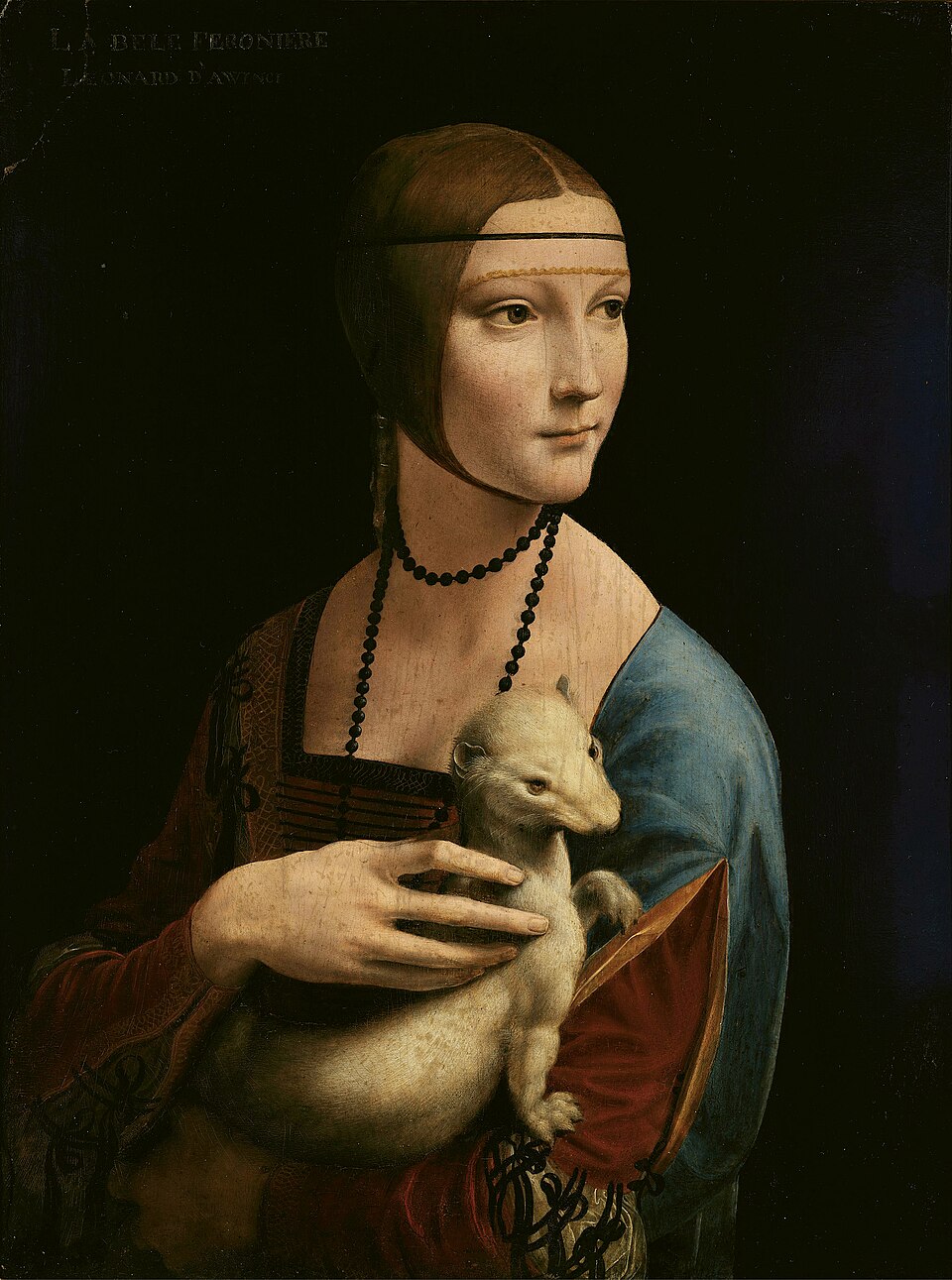
Decoding Da Vinci's Masterpiece: The Last Supper Lady With An Ermine
Leonardo da Vinci, a name synonymous with unparalleled genius, left an indelible mark on art history. While his monumental fresco, The Last Supper, captivates with its dramatic narrative and psychological depth, another of his extraordinary creations, The Lady with an Ermine, offers an equally profound glimpse into his artistic mastery and innovative spirit. This captivating oil painting on a walnut panel, often discussed alongside other iconic works, stands as a testament to Leonardo’s skill in capturing individual personality and infusing portraits with layered meaning. It's a key piece in understanding the breadth of his contributions to Western art, demonstrating that his genius extended far beyond the grand scale of his religious works to the intimate world of portraiture.
Dating from around 1489-1491, The Lady with an Ermine is not merely a portrait; it's a vibrant narrative woven with threads of personal history, societal expectations, and intricate symbolism. This article, part of a series exploring Leonardo's profound legacy (you can read more about his other works in The Last Supper Lady With An Ermine - Article 2), delves into the depths of this particular masterpiece, revealing the identity of its enigmatic sitter, the hidden messages within its brushstrokes, and the revolutionary techniques that distinguish it as one of Leonardo's most treasured surviving panel paintings.
Cecilia Gallerani: The Muse Behind the Masterpiece
At the heart of The Lady with an Ermine is a young woman whose identity has been confidently established as Cecilia Gallerani. In 1489, at a tender age, Cecilia became the mistress of Ludovico Sforza, the powerful Duke of Milan, a significant patron for whom Leonardo da Vinci was then working. Leonardo's presence in Milan under the Duke's patronage was a period of immense creative output, encompassing not just painting but also engineering, military design, and scientific study. It was during this fertile era that the portrait of Cecilia came to life, capturing her at a pivotal moment in her relationship with the Duke.
The painting measures 54.8 cm high and 40.3 cm wide, a relatively intimate scale for such a monumental work of art. Leonardo's decision to immortalize Cecilia Gallerani speaks volumes about her status and the respect she commanded, even as a mistress. Her intelligent gaze and composed demeanor, characteristic of Leonardo's psychological insight, hint at a woman of considerable intellect and charm, qualities that would have appealed greatly to both the Duke and the artist.
The Profound Symbolism: More Than Just a Pet
Central to the portrait, and indeed to its enduring fascination, is the creature Cecilia cradles: a white ermine. Far from being a mere pet, the ermine is laden with layers of symbolism, a hallmark of Renaissance art and a testament to Leonardo’s sophisticated storytelling:
- Character and Purity: According to legend, the ermine was known for its extreme fastidiousness, preferring death over soiling its pristine white fur. This popular belief would have immediately suggested Cecilia's own perceived wholesome and pure nature, despite her status as a ducal mistress. It was a subtle yet powerful affirmation of her virtue in the eyes of society.
- A Nod to the Duke: Even more directly, the ermine serves as a clever visual pun and a direct reference to Ludovico Sforza himself. The Duke was known by the nickname "Ermellino" or "Italian Moor, white ermine." By including the ermine, Leonardo subtly yet unmistakably celebrates the intimate connection between Cecilia and the Duke, weaving their relationship into the very fabric of the artwork. This masterful use of symbolism elevates the portrait beyond a simple likeness, making it a celebration of their union and a sophisticated tribute to both the sitter's grace and the patron's influence.
This dual symbolism showcases Leonardo’s genius in employing allegory to enrich his compositions. It’s a technique he also applied in his grander works, where every gesture and detail, much like in The Last Supper, contributes to the overarching narrative and psychological depth.
Leonardo's Revolutionary Artistry and Techniques
The Lady with an Ermine is lauded not only for its subject and symbolism but also for its groundbreaking artistic techniques, which set it apart from typical Renaissance portraiture. Leonardo's insatiable curiosity and experimental approach are evident in every brushstroke:
- Unconventional Pose: Deviating from the rigid, profile or frontal poses common in the 15th century, Leonardo captures Cecilia in a dynamic, mid-movement stance. She appears to be turning, her gaze directed not at the viewer but slightly to her left, engaged in an unseen interaction. This choice imbues the portrait with a sense of immediacy and life, as if we have stumbled upon a private moment. The affectionate way she cradles the ermine, observing it intently, further enhances this feeling of spontaneous interaction.
- Anatomical Realism: Leonardo's meticulous study of anatomy, both human and animal, is strikingly evident. He renders every detail of Cecilia's delicate features, her hands, and the ermine's fur and musculature with astonishing precision. This commitment to realism adds a profound sense of naturalism and authenticity to the work, reflecting his scientific mind at play within his art.
- Sfumato and Perspective: While perhaps not as overtly dramatic as in The Last Supper, Leonardo employs his signature sfumato technique, a subtle blurring of lines and colors, to create soft transitions between light and shadow. This gives the skin a lifelike glow and softens the contours, lending an ethereal quality to Cecilia's form. His masterful use of perspective, even in a close-up portrait, contributes to the overall three-dimensionality and presence of the subject.
This innovative approach to portraiture cemented Leonardo's reputation as a visionary. He wasn't just painting a likeness; he was capturing a soul, a moment, and an inner world, pioneering a psychological depth that would influence generations of artists.
A Masterpiece's Journey Through Time and Alterations
The journey of The Lady with an Ermine through the centuries is as compelling as its initial creation. This treasured piece, one of only a handful of authentic panel paintings by Leonardo that survive, found its way into Polish hands in 1800. However, like many ancient works, it has not remained untouched.
Art historical analysis, including X-ray examinations, has revealed that the painting has undergone significant overpainting and restoration, likely in the 17th century:
- Background Alterations: The original background, which X-rays suggest may have included a door, was completely darkened and overlaid. This alteration dramatically changes the context of the portrait, shifting it from a potentially architectural setting to a more abstract, timeless space.
- Figural Retouches: Cecilia’s dress below the ermine was retouched, and a transparent veil she was originally wearing was repainted to match the color of her hair. This change created the illusion that her hair extends down and underneath her chin, altering her facial framing. Furthermore, dark shadows were added between the fingers of her right hand, and a close inspection shows that the bottom two fingers appear somewhat inferior to the others, a result of an unknown restorer's intervention.
These historical alterations highlight the challenges of preserving and understanding ancient masterpieces. While they may impact our perception of the original intent, they also tell a fascinating story of the painting's life beyond Leonardo's studio. Despite these changes, the exquisite elegance and artistic genius of Leonardo da Vinci's incomparable creative mind shine through, making The Lady with an Ermine an object of the greatest rarity and a captivating image for all time.
Conclusion
The Lady with an Ermine remains an enduring testament to Leonardo da Vinci's extraordinary talent. From the captivating gaze of Cecilia Gallerani to the profound symbolism of the ermine, and from the revolutionary pose to the intricate details of anatomical realism, every aspect of this painting speaks volumes about its creator's genius. It serves as a powerful counterpoint to his more expansive narratives like The Last Supper, demonstrating his versatility and mastery across different scales and subjects. As we marvel at its intricate beauty and unravel its layers of meaning, we are reminded of Leonardo's unique ability to merge art and science, human emotion and intellectual symbolism, creating a legacy that continues to inspire and challenge us to this day.